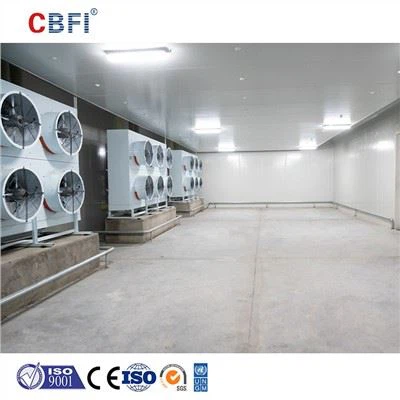


High-Performance Tunnel Freezing: Precision Cooling for Poultry
1. Advanced Cryogenic Tunnel Engineering
Optimizing Latent Heat Removal The CBFI Tunnel Freezer is a sophisticated industrial system designed for the Individual Quick Freezing (IQF) of protein products. By utilizing high-velocity, multi-directional airflow and a continuous conveyor system, it achieves a "micro-crystalline" freeze state. This prevents the formation of large ice crystals that damage cellular walls, ensuring the chicken maintains its original juice and texture upon thawing.
2. Systematic Process: Poultry Freezing SOP
Selection & Hygiene: Only high-grade, pre-chilled raw poultry is used to ensure microbial stability.
Preparation & Marination: Precision cutting ensures uniform thickness for consistent freezing rates.
Strategic Tray Loading: Chicken pieces are spaced to facilitate 360° airflow exposure, preventing "dead zones" where heat can be trapped.
The Cryogenic Phase :
The Sink: Products enter a specialized zone stabilized at -35°C to -40°C.
Three-Stage Cooling: The poultry passes through pre-cooling, transition freezing, and core hardening stages within 20–30 minutes.
Airflow Dynamics: Turbulent cold air rapidly lowers the core temperature, locking in nutrients.
Stabilization & Storage: Post-freeze, the chicken is vacuum-sealed to prevent freezer burn and stored at -18°C for distribution.
3. Core Technical Advantages
Nutrient Retention: Ultra-fast freezing minimizes moisture migration (drip loss), maintaining the protein's biological value.
Thermal Uniformity: High-pressure fans ensure the temperature gradient between the surface and core is neutralized rapidly.
Operational Sustainability: Advanced PIR insulation and VFD-controlled motors reduce the carbon footprint per ton of processed poultry.
4. Critical Factor: Tray Selection & Metallurgy
Thermal Conductivity: Metal trays (Aluminum/SUS304) act as heat sinks, accelerating the transfer of thermal energy compared to plastic alternatives.
Cryogenic Resilience: Materials like HDPE or PP are selected for their impact resistance at sub-zero temperatures, preventing structural fatigue.
System Load Optimization: Lightweight alloy trays reduce the mechanical torque required from the conveyor motor, lowering electricity overhead.
Sanitary Compliance: Electropolished surfaces inhibit bacterial adhesion and streamline the CIP (Clean-in-Place) process.
5. Variables Influencing Freezing Efficiency
Aerodynamics: The velocity of the air determines the "boundary layer" thickness; higher speeds lead to faster freezing.
Geometric Uniformity: Standardizing the cut size reduces variations in the freezing cycle.
Enthalpy Management: Pre-cooling raw chicken significantly reduces the total refrigeration load within the tunnel.
Loading Density: Overcrowding creates thermal insulation, extending the required dwell time.
Conveyor Velocity: Precisely calibrated to match the product's thickness for 100% core hardening.
Vapor Management: Balanced humidity prevents product dehydration while avoiding evaporator frosting.
6. The Impact of Product Thickness
Heat conduction is inversely proportional to the square of the product's thickness. Thicker chicken breasts require exponentially more time for internal heat to escape.
Conduction Path: Greater thickness increases the resistance to thermal migration from the center to the surface.
The "Zone of Maximum Crystallization": Thick sections linger longer in the critical temperature zone where large, damaging ice crystals form.
Quality Consistency: To mitigate uneven freezing, we recommend staged slicing or utilizing a specialized impingement tunnel freezer for thicker cuts to ensure the center reaches -18°C without over-freezing the exterior.