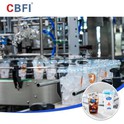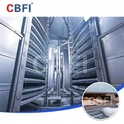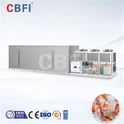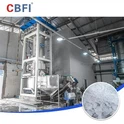

CBFI saline spray freezing device is an efficient quick freezing device specially designed for aquatic processing. It provides precise parameter configuration to meet the rapid freezing needs of seafood products with high moisture content, such as prawn, whitebait, squid, sardine, etc
• Processing capacity: Single batch processing capacity can reach 1000-5000 kilograms (adjustable according to model configuration)
• Temperature range: -35 ℃ to -40 ℃ (frozen layer temperature, ensuring that the center temperature of the product quickly drops below -18 ℃)
• Salt water quick freezing tank: made of stainless steel material, corrosion-resistant and durable, equipped with an efficient spray system inside to ensure even freezing of salt water
• Low temperature saltwater circulation system: using environmentally friendly low freezing point saltwater, combined with efficient refrigeration units, to maintain a stable low-temperature environment
• Automated feeding and unloading system: equipped with automatic conveyor belts and sorting devices to achieve continuous operation and reduce manual intervention
• PLC intelligent control system: supports remote monitoring and data acquisition, adjusts operating parameters in real time, and ensures consistency in freezing effect. Safety protection system: including leakage protection, emergency stop function, and multiple insulation designs to ensure safe operation
Core functions and application scenarios
1. Core functions for aquatic processing
• Quick freezing and quality preservation: brine spray technology directly contacts the product surface through micron level water mist, and freezes within 20-30 minutes, reducing the damage of ice crystal formation to cell structure, and reducing the juice loss rate after thawing.
• Uniform freezing: The double-sided circular spray system achieves 360 ° uniform coverage, avoiding local supercooling or incomplete freezing problems, especially suitable for irregularly shaped seafood such as squid whiskers and shrimp tails.
• Oxidation prevention and preservation: Low temperature salt water (concentration 2% -4%) can inhibit microbial activity, reduce oxidation discoloration, and extend shelf life (compared to traditional freezing, it can be extended by 10-15 days).
• Batch Consistency: The intelligent temperature control system (± 0.5 ℃ accuracy) ensures consistent freezing parameters for each batch of products, avoiding quality differences caused by temperature fluctuations.
2. Typical application cases
• Frozen whole shrimp: The processed shrimp has a rosy color and high rehydration rate, making it suitable for export and high-end catering supply chains.
• Quick freezing of silver fish: maintain the intact shape of the fish body, avoid adhesion or breakage, and enhance the appearance value of the product.
• Small squid processing: Quickly freeze to reduce water loss and ensure a chewy texture.
• Sardines fillets: suitable for flake products, flat after freezing, and more efficient stacking storage.
Frequently Asked Questions (FAQ)
Q1: Does saline spray affect the salt content of the product?
A: The concentration of saltwater is strictly controlled at 2% -4% (lower than the natural salt content of seafood), and a circulating purification system is used to ensure that only trace amounts of salt adhere to the surface, without affecting the original flavor of the product.
Q2: What is the frequency of equipment maintenance?
A: The standard filtration system can isolate impurities. It is recommended to clean the nozzle and pipeline every 3 months, and the annual maintenance cost is 20% lower than similar equipment.
Q3: Noise and space requirements?
A: Operating noise ≤ 75dB (A), suitable for workshop environment; The minimum installation space is only 3m x 4m, supporting L-shaped or right angle layouts.
Q4: Is it suitable for small and medium-sized processing plants?
A: Yes, we offer small models with a capacity of 1.5 tons/hour, low energy consumption, and support for segmented start-up, which is suitable for medium scale production capacity needs.
Q5: How long is the investment return cycle?
A: Based on the annual processing capacity, it usually takes 12-18 months to recover equipment costs (calculated by energy savings+quality premium).