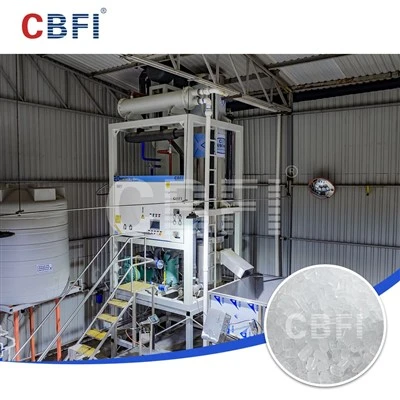


Icesource(CBFI) Solid Cut Tube Ice Machine: Case Study Analysis
Client Needs
Clients who opt for solid cut tube ice machines typically have specific requirements that align with their operational goals. These include:
1. High Production Efficiency: Businesses require machines capable of producing large quantities of ice within short periods to meet high demand.
2. Durability and Reliability: Equipment must withstand continuous use without frequent breakdowns or maintenance issues.
3. Energy Efficiency: Clients seek machines that consume minimal energy while maintaining optimal performance levels.
4. Customizable Solutions: The ability to adjust production rates, sizes, and other parameters according to business needs is crucial.
Challenges Faced by Clients
Despite the benefits of using solid cut tube ice machines, clients often encounter several challenges:
1. Long Freezing Time: Solid tube ice requires more time to freeze compared to hollow structures, which can reduce overall production efficiency.
2. Complex Refrigerant Management: The process of melting solid ice structures during the release phase necessitates careful refrigerant management to prevent inefficiencies.
3. Higher Energy Consumption: Due to the extended freezing period, solid cut tube ice machines may consume more energy than their hollow counterparts.
4. Maintenance Requirements: Complex designs can lead to higher maintenance costs and downtimes if not properly managed.
Solutions Provided by Icesource(CBFI)
To address these challenges, Icesource(CBFI) offers innovative solutions tailored to client needs:
1. Enhanced Freezing Technology:
• Advanced Heat Exchange Systems: By improving heat exchange efficiency, Icesource reduces the time required to freeze water into solid ice tubes. This innovation significantly boosts production rates while maintaining energy efficiency.
• Optimized Cooling Circuits: The design incorporates optimized cooling circuits that ensure uniform freezing across all sections of the ice tube, reducing inconsistencies and enhancing product quality.
2. Efficient Refrigerant Management:
• Smart Defrost Mechanisms: Icesource implements smart defrost mechanisms that precisely control the amount of heat applied during the ice release phase. This ensures efficient refrigerant usage and minimizes energy waste.
• Automated Control Systems: Advanced control systems monitor and adjust refrigerant flow dynamically, ensuring stable operation under varying conditions.
3. Energy-Saving Innovations:
• Insulated Materials: The use of high-quality insulating materials reduces heat loss from the ice-making chamber, resulting in lower energy consumption.
• Variable Frequency Drives (VFD): VFD technology allows motors to operate at variable speeds based on load requirements, further conserving energy.
4. Modular Design for Easy Maintenance:
• Accessible Components: A modular design enables quick access to critical components, facilitating faster troubleshooting and repairs.
• Predictive Maintenance Tools: Integrated sensors and data analytics tools predict potential failures before they occur, minimizing unplanned downtime and associated costs.
5. Customization Options:
• Flexible Configurations: Icesource offers customizable configurations to suit various client needs, such as adjustable ice thickness, production speed, and output size.
• Integrated Automation: Optional automation features streamline operations, reducing labor requirements and increasing overall efficiency.
Case Study Example
A beverage manufacturing company approached Icesource(CBFI) seeking a solution to meet their growing demand for solid cut tube ice. The client faced challenges related to low production efficiency, high energy costs, and frequent machine breakdowns.
Implementation Process:
1. Initial Assessment: Icesource conducted a thorough analysis of the client's existing setup, identifying areas for improvement.
2. Customized Solution: Based on the assessment, a solid cut tube ice machine equipped with advanced heat exchange systems, smart defrost mechanisms, and energy-saving innovations was recommended.
3. Installation and Training: The new machine was installed, followed by comprehensive training sessions for the client's staff to ensure proper usage and maintenance.
Results Achieved:
• Increased Production Efficiency: The new machine achieved a 30% increase in production capacity compared to the previous model.
• Reduced Energy Costs: Energy consumption decreased by 20%, translating into significant cost savings.
• Improved Reliability: Machine breakdowns were reduced by 50%, enhancing operational continuity.

Production Efficiency Difference Between Solid Tube Ice and Hollow Tube Ice
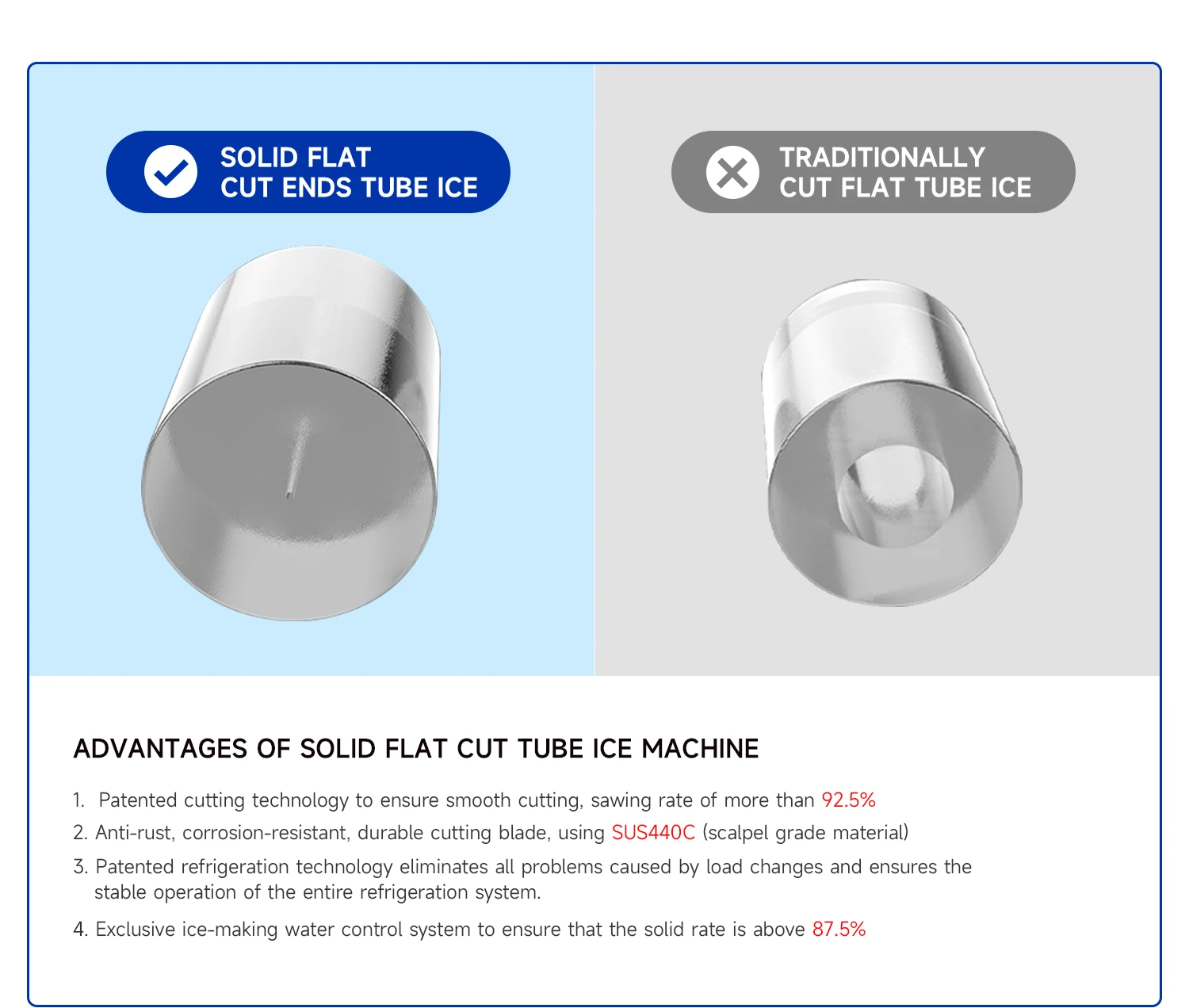
Solid Tube Ice Production Efficiency: Solid tube ice machines require more time to freeze the entire volume of water during the ice-making process, resulting in lower production efficiency compared to hollow tube ice. Additionally, during the ice release process, the solid structure requires less heat for melting, which may lead to complexities in refrigerant management, thus affecting overall production efficiency.
Hollow Tube Ice Production Efficiency: Hollow tube ice, due to its hollow structure, freezes internal water faster, leading to higher production efficiency. The tube ice machine quickly forms ice tubes through a continuous refrigeration cycle. With a high degree of automation, it is suitable for continuous production. After the ice blocks are formed, they can easily fall off with the help of gravity or mechanical methods, reducing energy consumption.
Hot Tags: 30 Tons Solid Flat Cut Ends Tube Ice Machines, China, manufacturer, factory, price, buy, ice tube maker machine, ice tube machine, 1 ton tube ice machine