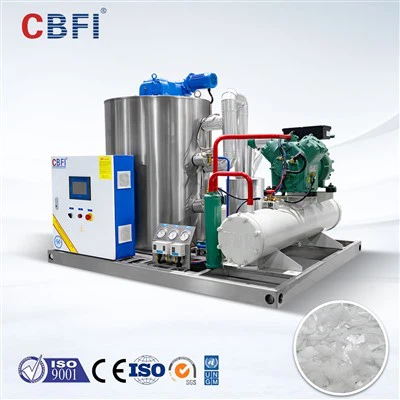


Industry Cooling Challenges in Chemical Production
1. High-Temperature Continuous Operation
Chemical processes typically run 24/7 under continuous heat loads. Equipment such as:
Reaction vessels
Distillation towers
Condensers
require stable thermal control.
Key issues:
Cooling efficiency drops significantly in ambient temperatures above 40°C
Traditional systems suffer 15%–30% performance degradation during summer peaks
Temperature fluctuations directly impact reaction stability and yield consistency
2. Corrosive Operating Environment & Safety Risks
Chemical plants often involve exposure to:
Sulfuric acid (H₂SO₄)
Hydrochloric acid (HCl)
Organic solvents and reactive gases
Common failures in conventional systems:
Corrosion-induced leakage
Seal degradation
Heat exchanger fouling
High failure rate within 3 years (up to 35% in severe environments)
Even minor leakage in cooling circuits can lead to:
Process interruption
Chemical contamination risks
Safety incidents and compliance violations
3. Energy Consumption & Environmental Compliance Pressure
Cooling systems represent a significant share of plant operating costs:
18%–25% of total electricity consumption in chemical facilities
Strict compliance required under energy efficiency regulations (e.g., GB 19576-2021)
Wastewater discharge must meet stringent COD limits (≤ 50 mg/L in many regions)
Therefore, energy efficiency and system optimization are critical investment drivers.
CBFI Rake System Flake Ice Machine: Core Engineering Architecture
1. Corrosion-Resistant Industrial Design
To operate reliably in aggressive chemical environments, CBFI adopts a reinforced structural system:
Duplex stainless steel 2205 internal structure
Tensile strength ≥ 500 MPa
Molybdenum-enhanced anti-corrosion coating
Acid/alkali resistance improved up to 10% concentration range
Titanium alloy bearings
Service life up to 4× longer than conventional carbon steel systems
Fluororubber (FKM) sealing system
Temperature resistance: -40°C to 200°C
Additional safety feature:
Full negative-pressure operation to eliminate refrigerant leakage risk
2. High-Efficiency Heat Exchange System
The system is optimized for high-load industrial cooling:
Dual-stage cooling architecture
Pre-cooling + main condensation
25% higher efficiency than single-stage systems
Optimized evaporator fin spacing (2.3 mm)
+18% heat exchange surface utilization
Intelligent PID temperature control
Accuracy: ±0.5°C
Fully compatible with DCS integration systems
This enables precise thermal control for sensitive chemical reactions.
3. High-Temperature & Extreme Environment Adaptability
Designed for harsh operating conditions:
Stable operation up to 50°C ambient temperature
Forced cooling + enhanced heat dissipation system
Emergency tolerance up to 60°C for short-duration events (≤2 hours)
Dual power redundancy system
Grid + diesel generator compatibility
Automatic switchover time < 0.5 seconds
This ensures continuous cooling even during power instability or extreme weather events.
Application Scenarios in Chemical Industry
1. Reactor Cooling Systems
Typical applications:
Nitric acid production
Epoxy resin polymerization
Exothermic catalytic reactions
Solution design:
Closed-loop ice water circulation
Direct jacket cooling of reactors
Integrated flow + temperature monitoring system
Pressure tolerance up to 1.6 MPa
Result:
Stable reaction temperature control
Reduced runaway reaction risk
Improved batch consistency
2. Distillation Tower Condensation Systems
Key advantages:
Direct connection between flake ice system and condenser
Reduced intermediate heat transfer loss
Ice particle size controlled at 3–5 mm
Heat exchange area increased by ~30%
Result:
Higher condensation efficiency
Improved separation performance
Reduced energy consumption per ton of output
3. Hazardous Chemical Storage Cooling
Safety-oriented design features:
Explosion-proof PLC control system (Ex d IIC T4)
ATEX Zone 2 compliance capability
Grounding resistance < 4 Ω
Intrinsically safe cooling circuit design
Application:
Temperature stabilization of volatile or hazardous chemical storage tanks
Prevent thermal decomposition or pressure buildup
System-Level Industrial Value
The CBFI rake system flake ice machine is not just a cooling unit-it functions as a process stability platform for chemical production.
It delivers:
Stable thermal control under extreme environments
Reduced failure rates in corrosive conditions
Lower total energy consumption per production cycle
Enhanced process safety and compliance assurance
Integration capability with modern DCS/automation systems
Conclusion
In chemical production environments where safety, continuity, and precision are non-negotiable, conventional cooling technologies often reach their operational limits.
The CBFI rake system flake ice machine addresses these constraints through:
Corrosion-resistant engineering design
High-efficiency multi-stage cooling architecture
Extreme environment operational capability
Industrial-grade automation and safety redundancy
It provides a stable and controllable cooling foundation for modern chemical manufacturing, enabling both efficiency optimization and risk reduction in high-intensity production environments.
Hot Tags: Rake System Flake Ice Machine for Chemical Industry, China, manufacturer, factory, price, buy, ice flake making machine, flake ice machine for fish, 5 ton flake ice machine, commercial ice flake machine, flake ice machine