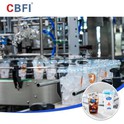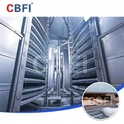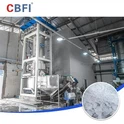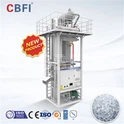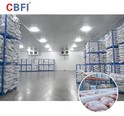

The demand for ice cups is increasing in industries such as catering, cold chain transportation, and fresh food delivery. However, traditional ice production is difficult for small and medium-sized enterprises to enter due to expensive equipment, high energy consumption, and strict site requirements. The phased investment plan you proposed is an innovative solution to this pain point, which can not only reduce initial financial pressure but also adapt to market changes through flexible expansion. The following is the specific implementation plan:
Startup phase: Core equipment configuration and cost control
1. Selection of water purifier (500 liters/day)
Why choose a 500 liter water purifier?
• Cost optimization: A daily output of 500 liters is sufficient to cover the initial daily production of about 2 tons of ice cubes (calculated based on a 1:2 water ice ratio), avoiding equipment idle.
• Water quality assurance: By using reverse osmosis (RO) or ultrafiltration technology, the purity of ice cubes is ensured to avoid heavy metal and microbial residue issues.
• Easy installation: Small water purifiers have a compact size and can be directly connected to existing water supply systems without the need for additional pipeline modifications.
Procurement suggestion:
• Priority should be given to modular design, and later on, filter elements can be stacked or the capacity of the water storage tank can be expanded.
• Pay attention to energy consumption labeling (such as first level energy efficiency) and reduce electricity bills in the long run.
2. Cube ice machine (3 tons/day)
Why choose a 3-ton square ice machine?
• Adaptation requirements: A single 3-ton production capacity can meet the daily consumption of small and medium-sized restaurants and fresh food delivery points (approximately 600-800 standard ice cups per day).
• Space efficiency: The square ice machine produces ice quickly and the ice cubes are neat, making it easy to manually transport and store.
• Easy maintenance: Fully automated ice production process, only requiring regular cleaning of the evaporator, reducing manual intervention.
Technical parameter reference (combined with the cold storage technology you provided):
• Temperature control: It needs to be compatible with the 4-10 ℃ environment of the cold storage room to avoid premature melting of ice cubes or water stains.
• Material requirements: The contact surface of the square ice machine should be made of food grade 304 stainless steel, which meets the purchaser's requirements for hygiene standards.
3. Practical choice of manual packaging
There are three major advantages to using manual filling in the initial stage:
• Cost savings: Save on the procurement, debugging, and maintenance costs of automation equipment (approximately 30% -50% of the initial investment).
• High flexibility: can quickly respond to temporary adjustments in ice cup size and packaging materials (such as environmentally friendly PP materials and biodegradable films).
• Risk controllable: By manually observing the quality of ice cubes (such as hardness and transparency), large-scale losses caused by automation failures can be avoided.
Core value of the product: low-cost and efficient solutions
• Investment return calculation:
Total investment in the first phase of equipment (water purifier+square ice machine)
The investment payback period is much lower than that of fully automated production lines.
• Energy consumption and stability:
The daily power consumption of the square ice machine is about 80-100 degrees. Combined with the cold storage room parameters (temperature 4-10 ℃) provided by you, it can further reduce the energy consumption during ice storage and transportation.
Dual power support (electric/solar) ensures continuous production in case of power outages or extreme weather conditions (refer to the 30 hour backup plan in the cold storage room).
Product Quality and Compliance
• Quality standards for ice cubes:
Water quality: RO water purifier filters out impurities, TDS value ≤ 5ppm.
Ice strength: The compression molding process of the square ice machine has a compressive capacity of ≥ 100kg/m ² and no fragmentation during transportation.
• Packaging adaptability:
Manual filling can customize ice cup specifications (such as 500g/cup, 800g/cup) to meet the capacity needs of catering customers for different scenarios.
Provide traceable batch labels to record production time and water quality testing reports.
Scalability planning: seamless transition from manual to automated
The purchaser may be concerned about the feasibility of future capacity expansion and needs to clearly explain the upgrade path:
• Phase 2 (6-12 months):
Add one 3-ton cube ice machine, doubling the production capacity to 6 tons per day.
Introducing ice storage buckets (based on your 10 ton capacity design for cold storage rooms) to address inventory pressure during peak periods.
• Phase Three (1-2 years):
Install automated conveyor lines and packaging machines to achieve unmanned filling, sealing, and palletizing processes, reducing labor costs by over 30%.
Integrated remote monitoring system (such as GPRS data collection provided by you), real-time tracking of ice temperature, inventory, and equipment operation status.
The main line is "low-cost verification market - flexible expansion - technological upgrading", which helps buyers gradually establish production capacity advantages while controlling risks.
https://www.icemachinesource.com/ice-cup-production-line/
If you are interested in more details about this product,please contact with
E-mail:cbfi@icemakerchina.com
Mobile: +86-18929552761 (WhatsApp/ WeChat)